
 Čeština
“We create a city that helps.”
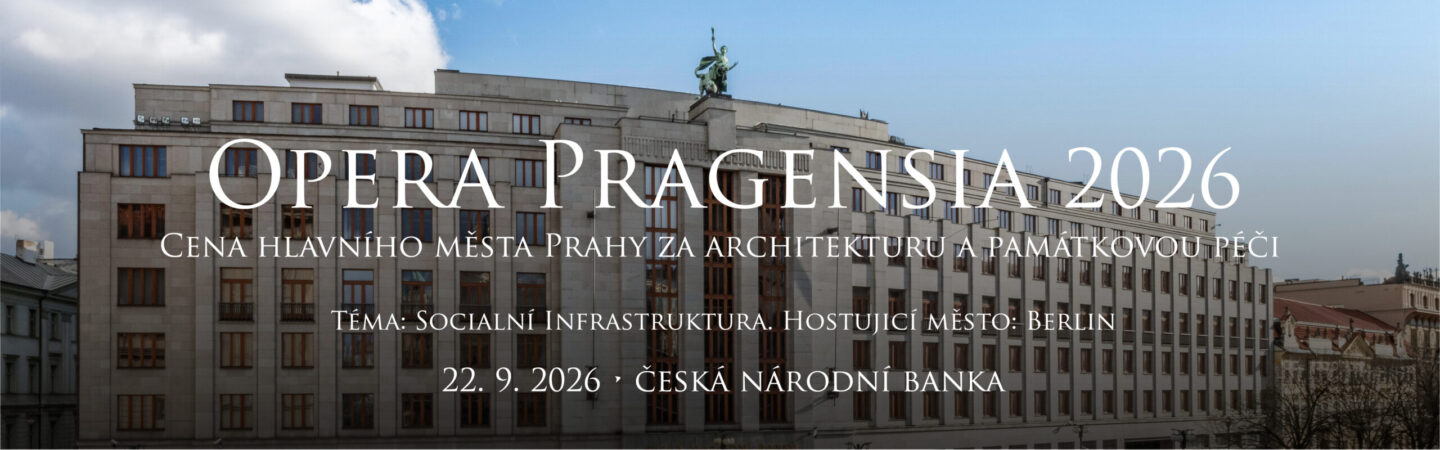
The fourth edition of the Capital City of Prague Award for Architecture and Heritage Conservation Opera Pragensia 2026 is dedicated to social infrastructure—projects and individuals who have long contributed to the quality of life of residents and to the development of Prague as an open, supportive, and cohesive city.
The theme responds to current societal challenges and highlights the importance of architecture, urban planning, and personal commitment in creating environments that are accessible, dignified, and functional for the everyday lives of Prague’s inhabitants.
Concept of the Year
The aim of this edition is to recognize projects and individuals involved in the development of healthcare, educational, social, community and cultural services, which support intergenerational connections, social cohesion, and the accessibility of services across the city. The awards will honor not only high-quality architectural realizations but also long-term efforts, value-based approaches, and broader societal contributions.
Following previous editions focused on:
-
2023 – contemporary architecture under the auspices of Deputy Mayor Petr Hlaváček,
-
2024 – heritage conservation under the auspices of Deputy Mayor Jiří Pospíšil,
-
2025 – public space under the auspices of Deputy Mayor Michal Hroza,
the year 2026 will be devoted to social infrastructure under the auspices of Deputy Mayor of the Capital City of Prague Alexandra Udženija, Member of the Prague City Council responsible for social affairs, housing, and healthcare, who has long advocated for dignified living conditions, accessible services, and the development of care for the residents of the capital.
International Cooperation
As in previous years, when the Grand Prix Opera Pragensia was awarded to the cities of Bratislava, Vienna, and Warsaw, this year the Award will also be presented during the ceremonial evening to the City of Berlin, in recognition of its long-term care for architectural and urban heritage and the development of friendly relations between Prague and Berlin. Berlin is a long-standing European leader in social architecture and urban planning.
Particular inspiration is drawn from the Berlin Modernism Housing Estates (UNESCO)—a group of six iconic residential complexes that combined social responsibility with modern architecture and created a model that continues to influence approaches to social infrastructure and sustainable urban development today.
Awarded Areas
Healthcare Infrastructure
Recognizes high-quality architectural solutions for healthcare facilities that improve accessibility and the standard of care for both physical and mental health.
Examples: hospitals, polyclinics, mental health centers.
Educational and Training Infrastructure
Highlights modern and functional schools and educational spaces that support learning, creativity, and community development.
Examples: kindergartens, primary and secondary schools, educational centers, facilities for children’s and youth leisure activities.
Social and Community Facilities
Evaluates buildings and projects providing support to disadvantaged groups and strengthening the cohesion of local communities.
Examples: assisted living homes, supported housing, shelters, community and family centers, day-care facilities.
Culture and Leisure Activities
Recognizes cultural, sports, and recreational buildings that enrich social life and promote social integration.
Examples: libraries, cultural centers, galleries, clubs, sports and recreational facilities.
Public Space and Infrastructure for Social Interaction
Acknowledges projects that create open, accessible, and high-quality places for meeting, relaxation, and everyday life.
Examples: parks, playgrounds, squares, pedestrian zones, urban furniture, and small-scale interventions improving environmental quality.
Innovative Social Infrastructure Projects
Rewards new approaches, technologies, and architectural solutions that enhance sustainability, functionality, and the social impact of urban infrastructure.
Examples: multifunctional facilities, shared spaces, ecological and energy-efficient solutions, modular construction.
Personalities
Highlights individuals and collectives who have long been committed to the development of social infrastructure, the support of people, and the values of humanity and solidarity in Prague.
Examples: personal dedication in social and healthcare services, philanthropy, patronage, and social responsibility.
Prague, 20 January 2026
Petr Ivanov